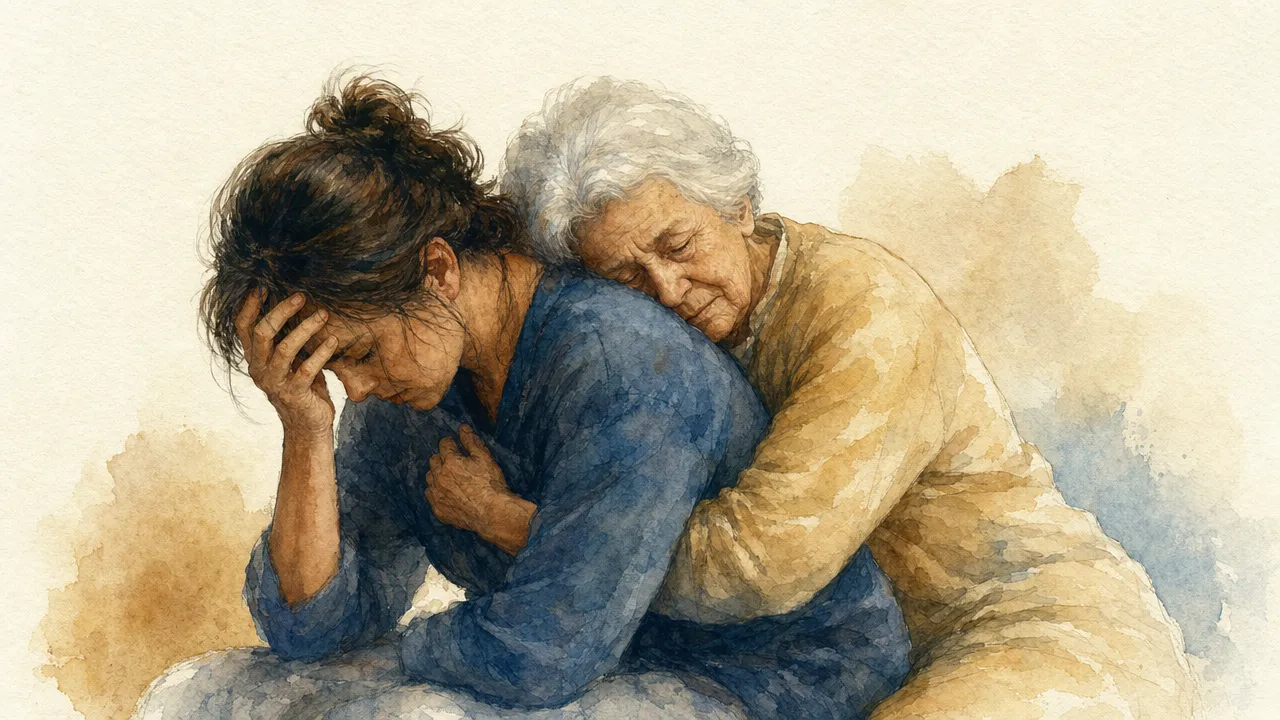
Caregivers / After
The caregiving is over. You are not okay yet. That is normal.
The literature on what happens to caregivers after is sparse, and most of it is about you.

The grief you expected
When your loved one dies, you grieve them.
The loss of the person who was your parent, your spouse, your sibling. The loss of who they were before the disease. The loss of who they became while you cared for them.
Grief in dementia caregiving is different from other grief because.
- The person was already partly gone. You grieved them in pieces, for years.
- Their death may bring relief alongside loss, and the relief is not a betrayal.
- You may feel that you lost them twice: once to the disease, once to death.
The grief you did not expect
A grief about who you became, and who you are now that the role has ended.

- "If I am not their caregiver, who am I?" The identity loss.
- The empty calendar. The loop is gone. The hours are quiet.
- The friendships you let lapse. The career you let drift.
- The body that ran on adrenaline and is now crashing.
This grief is real and predictable. Forty years of caregiver research describes it.
Your health
The mortality risk for caregivers does not end with caregiving.
Studies show elevated mortality and morbidity for 2 to 4 years post-caregiving. Take this seriously.
What to do.
- Get a full physical. Tell your doctor what you have just been through.
- Sleep aggressively. Make up for what you lost. This is medical work, not laziness.
- Re-establish basic self-care: meals, exercise, sun, contact with people.
- Treat depression and anxiety actively. The 81 percent of depressed caregivers who go untreated is not a statistic to join.
Your life
You may need.
- A grief group, ideally one that includes other dementia caregivers.
- A therapist, ideally one familiar with caregiver grief.
- Time. More than you think.
- Permission to feel relief, anger, guilt, joy, all of them.
- Eventually: new structure. A part-time job. A volunteer role. A class. A trip.

What to do with your loved one's voice recordings
The decision is yours.

If you set up Proxi, you may have voice recordings that meant your loved one's life and your own. Options.
- Keep everything as a personal archive. Listen on anniversaries, on hard days.
- Keep selected memorial recordings. Delete the rest.
- Delete everything. Start over.
- Wait. You do not have to decide right now.
We do not pressure either way. The voice belongs to you and your family.
Crisis
If you are struggling now.
If you are having thoughts of suicide, please call. The crisis line is for caregivers too. You belong on that line.
The numbers are at the top of every page on this site.